Description
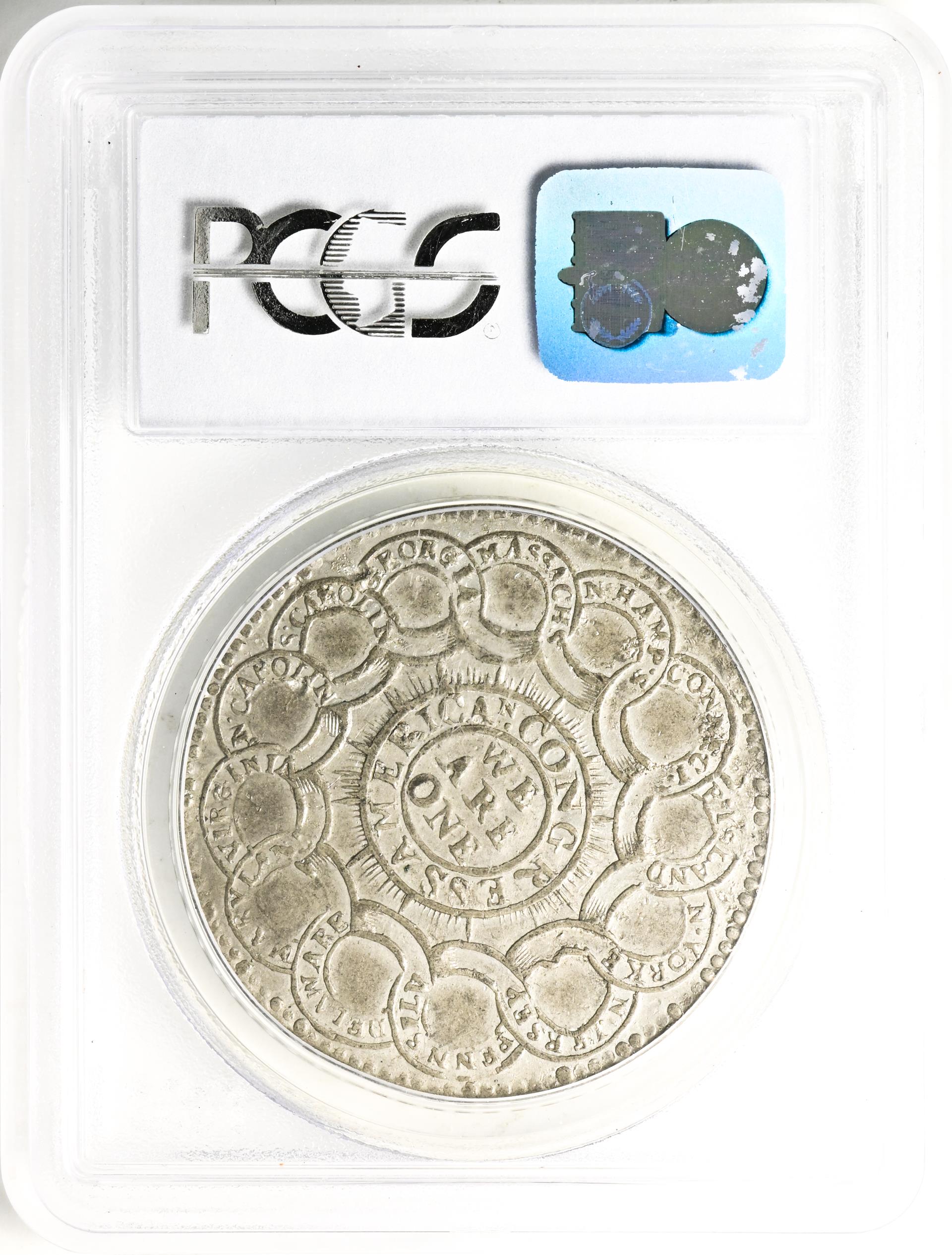
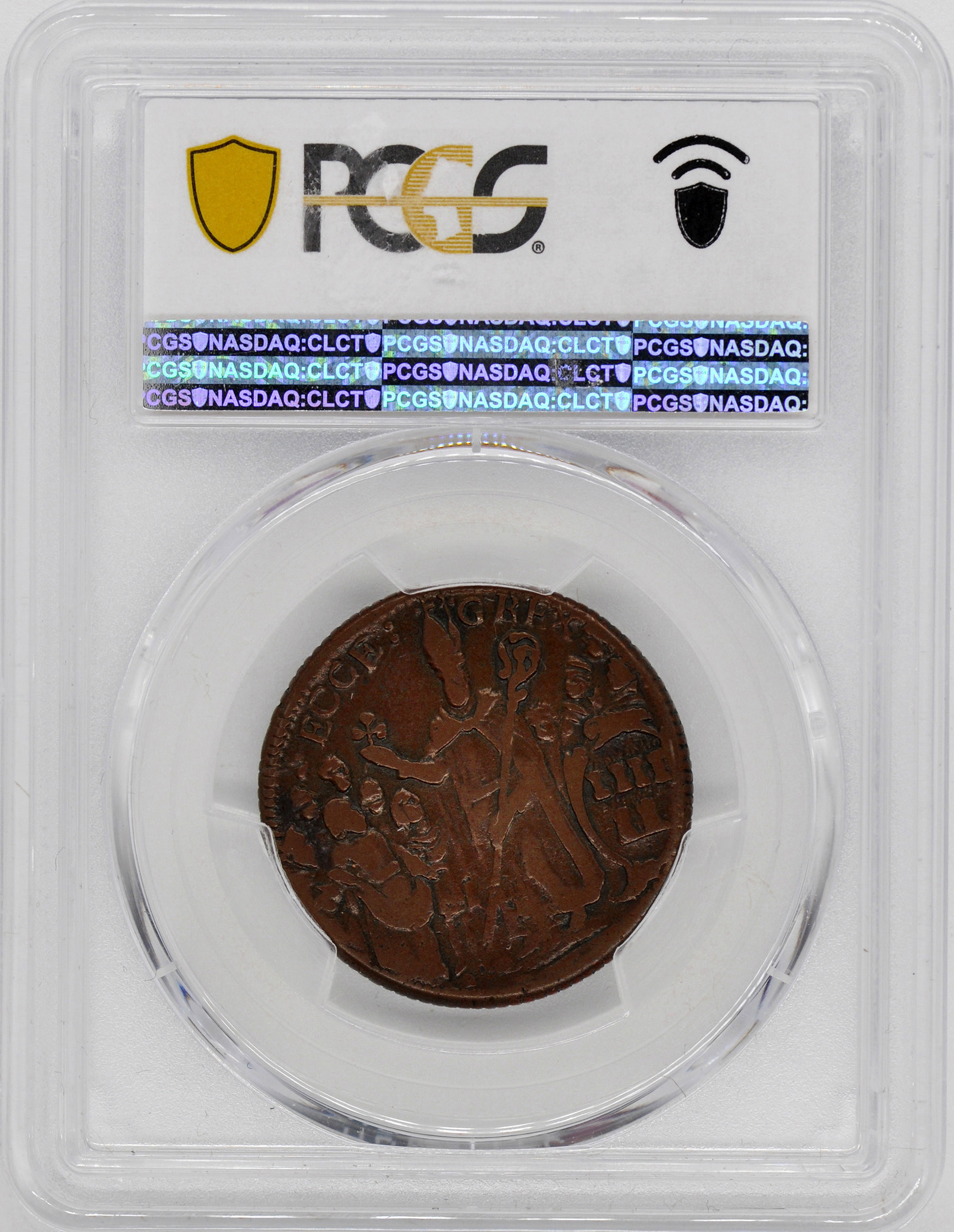
CURENCY VARIETY. LOVELY PEWTER SURFACES WITH SOME LUSTER STILL APPARENT. A PERFECT SPECIMEN FOR THE GRADE. CAC. The Continental Dollars, as they have since become known to numismatists, were authorized by the Continental Congress to serve the dual purpose of providing hard backing for the Continental Currency notes and to demonstrate the sovereignty of the United Colonies to the world. Although they may have perceived themselves as sovereign in 1776, the American colonists still had a long war ahead of them, and they also lacked the silver bullion required to make their dreams of circulating coinage a reality. After the Continental Congress received promise of a shipment of silver bullion from France, it instructed its agents to seek out the Freehold, New Jersey engraver Elisha Gallaudet to prepare dies for what was hoped would be a sizeable coinage. This Gallaudet did using the same devices employed on the fractional Continental Currency notes, which themselves were based on earlier sketches by Benjamin Franklin. Unfortunately, the French bullion did not materialize, and a large issue of silver coins could not be achieved. On the other hand, trial pieces have survived in various metallic compositions and displaying various die varieties. That represented by the present example displays the word CURENCY misspelled on the obverse due to a spacing problem encountered by Gallaudet while engraving the die. The composition of the planchet upon which this coin was struck has long been referred to as pewter, although this is technically incorrect as it is actually tin with less than 5% trace elements. Most survivors of the CURENCY, Tin (a.k.a. Pewter) variety are worn to one degree or another, which suggests that they probably did circulate at an unspecified value despite their status as trial strikings.