Description
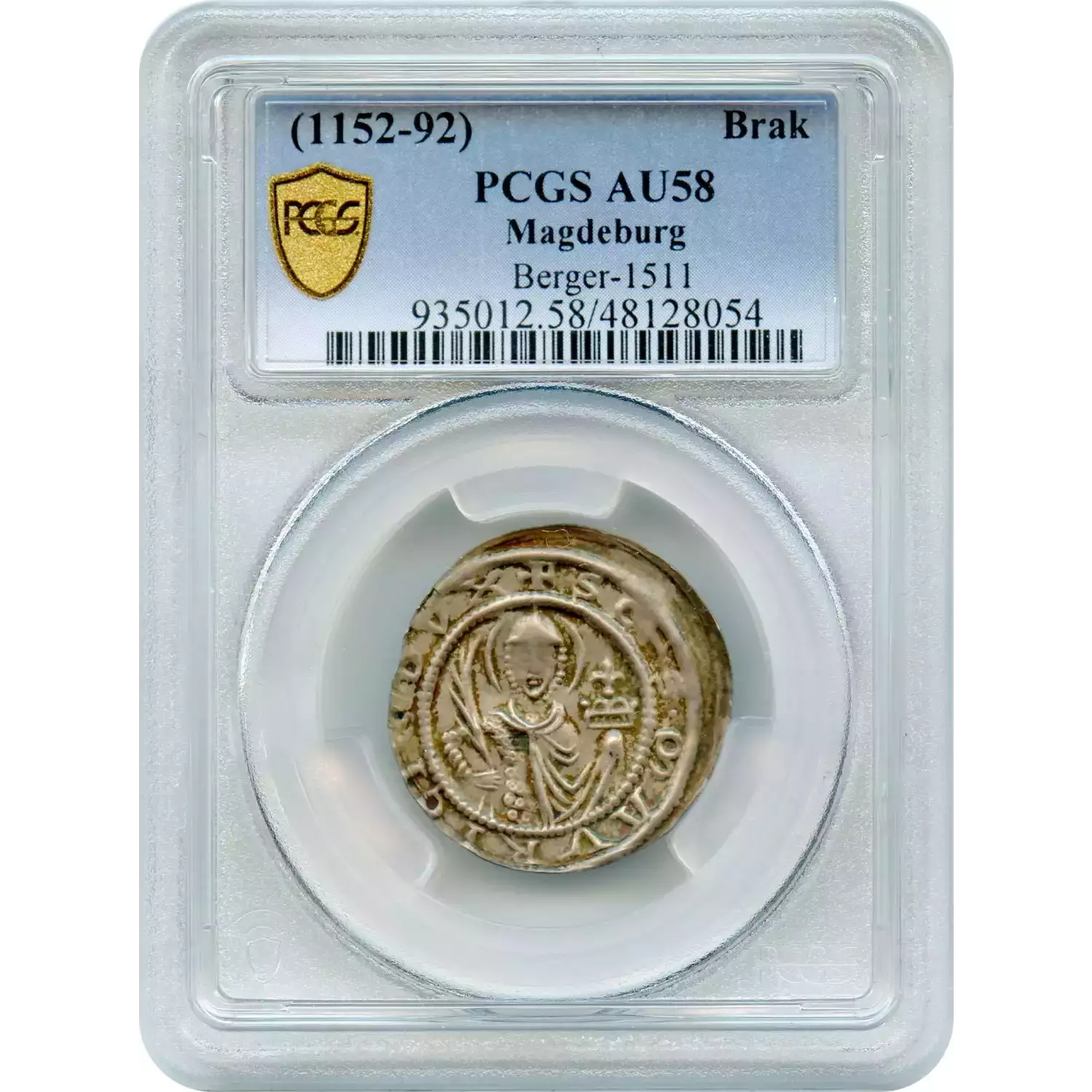
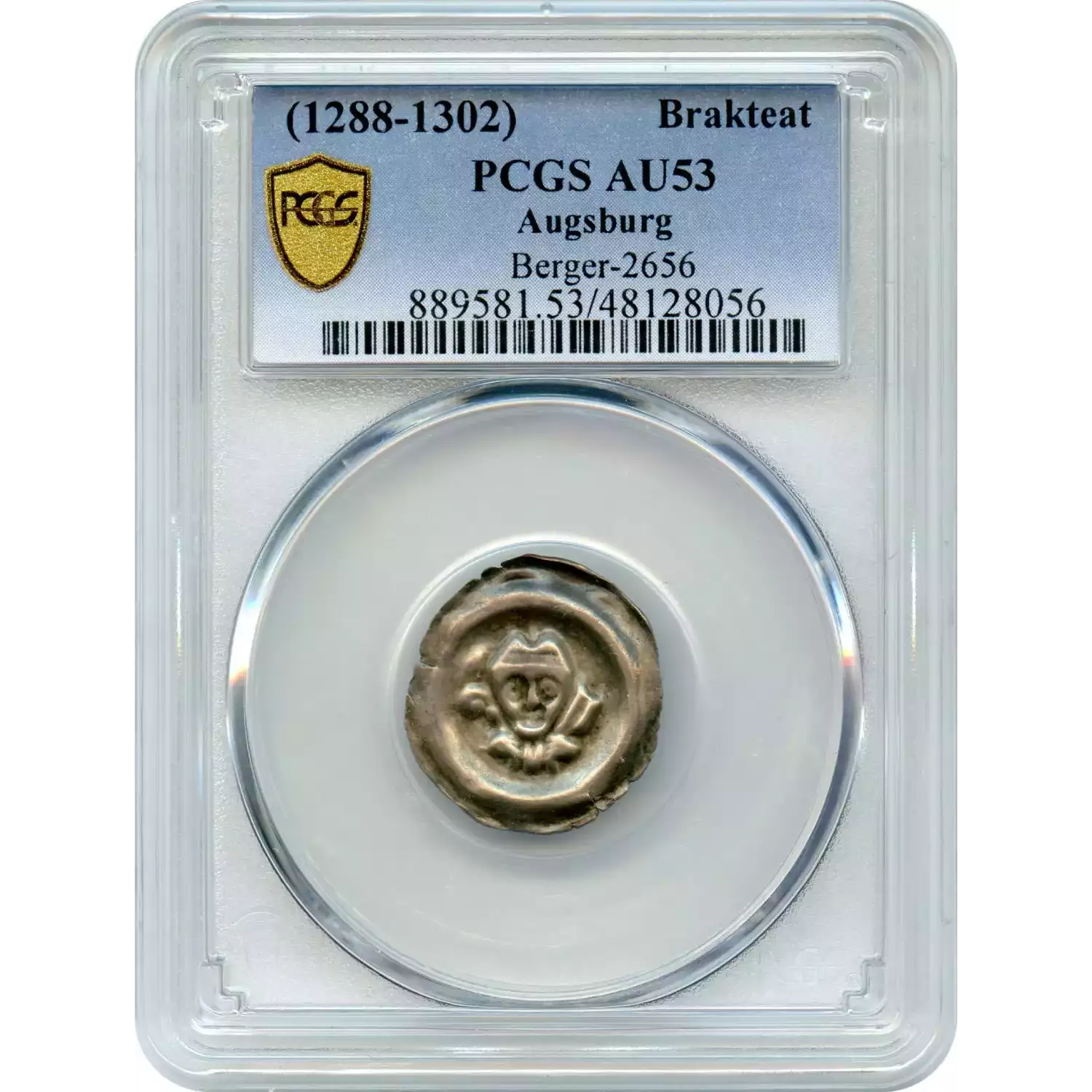
Germany, Magdeburg - the capital of Wichmann, Count of Seeburg 1152-1192. Bracteate (Moritzpfennig) 0.97g. (SC-S) The obverse features MAVRICIVS D(VX) Hip image of St. Moritz with palm branch and crown, lily above. The reverse is an incuse impression of the obverse. Refences: Mehl 241, Berger 1511. Bracteate: These were thin silver coins (or sometimes gold) characterized by a single-sided design impressed onto the metal. The thinness made them fragile, requiring a different minting process than traditional two-sided coins. St. Maurice: The Moritzpfennig specifically features an image of St. Maurice, who was depicted in armor. This gives the coin its nickname, the "Penny of Maurice". Time Period: The Moritzpfennig falls within the 1150-1200 AD timeframe, demonstrating the widespread use of bracteates in eastern Germany during this period. The use of bracteates, including the Moritzpfennig, reflected the evolving coinage practices in the Holy Roman Empire during this era. The inability of the king to enforce a uniform imperial standard for minting led to the rise of regional pfennigs with varying standards and exchange rates. This meant that different cities and local lords would issue their own coins, contributing to a diverse and sometimes inconsistent monetary landscape. The "bracteate period" is also known as the period of the regional pfennig for this reason.